

New details: Glenair has moved its SeaKing WetMate interconnect into final qualification testing under API 17F, extending the 10,000 psi SeaKing 700 family into field-serviceable wet-mate territory for subsea oil and gas.
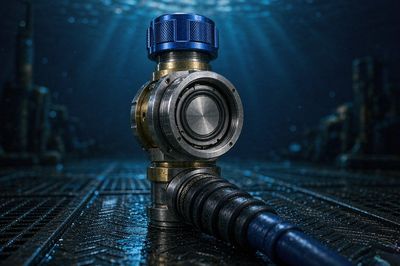
Glenair has moved its SeaKing® WetMate interconnect into final qualification testing — a step that brings a field-serviceable, API 17F-aligned wet-mate connector into the mainstream of subsea oil & gas procurement. The Glendale, California-based interconnect specialist has extended its long-established SeaKing 700 family, until now primarily a dry-mate line rated to 10,000 psi, with a design purpose-built for mating and de-mating while fully submerged.
For operators, the significance is less about another product launch and more about what it signals: the wet-mate interface is no longer a niche accessory reserved for a handful of deepwater projects. It is becoming the default specification wherever intervention costs dominate the lifecycle budget.
Field-serviceable by design
The new series is oil-bladder filled and built around a solder-free rear crimp contact body, which removes soldering from field repairs and allows a replacement contact to be fitted on deck rather than in a workshop. Glenair lists a field-replaceable insert stack and a field-replaceable overmolded pin contact with dual O-rings among the key design features, together with slit-tine socket contacts that use the company's low-resistance Crown Ring geometry to hold contact resistance down over repeated mating cycles.
An indexable flange lets the receptacle shell be clocked to the most accessible mating position — a small detail that matters when an ROV pilot is working blind at 1,000 metres. The connector is offered in three configurations: diver-mate, stab-plate and ROV-mate.
Specifications at a glance
- Pressure rating: 10,000 psi (approximately 690 bar) in both mated and open-face condition
- Standard: API Standard 17F, with compliance testing under way as part of final qualification
- Configurations: diver-mate, stab-plate and ROV-mate
- Materials: stainless steel shell with marine bronze coupler, or glass-filled PEEK composite for deep-sea corrosion resistance and cathodic delamination protection
- Contacts: crimp contacts manufactured to aerospace specification, with high-conductivity copper alloy for lower resistance and better heat dissipation
- Serviceability: removable inner bladder contact insert assembly; precision spanner nut retention plates
Why the “wet” in wet-mate matters
A dry-mate connector can only be joined in air, which means every reconfiguration requires the equipment to be recovered to surface. A wet-mate connector accepts mating and de-mating underwater, by diver or ROV, with the contacts protected by dielectric fluid and compensated sealing. The operational difference is straightforward: no vessel day, no recovery riser, no weather window. On mature fields where a single intervention can cost more than the connector itself, that arithmetic usually decides the specification.
The trade-off has always been complexity — pressure-balanced chambers, dynamic seals that must survive sediment-laden water, and ROV-compatible tooling. Glenair's answer is to keep the sealing architecture proven and move the complexity into serviceability, so that a damaged contact does not condemn the whole assembly.
The wider trend: qualification is the new battleground
Glenair is not moving alone. Teledyne Marine released a 5 kV wet-mate series rated to 3,000 metres in late 2025 and has extended its ROV-mateable hybrid range toward 6,000 metres with fibre and high-voltage power in a single titanium body. High-density optical wet-mate has become the reference architecture for cabled observatory and sensor networks, and offshore wind is absorbing thousands of wet-mate units per farm as floating projects move into deeper water.
What separates suppliers now is less the headline depth rating than the paperwork behind it. API 17F compliance, DNV certification and a documented qualification trail increasingly decide whether a connector can enter a project's critical path at all — and how much engineering rework a project team has to absorb before first oil.
What project teams should check
- Open-face rating, not just mated rating: a connector that is only rated when mated cannot survive a flooded jumper or a mis-stab.
- Mate cycle count and field repairability: ask how many cycles are qualified and what a contact replacement actually involves offshore.
- Sediment tolerance: dynamic seals in turbid water behave very differently from clean-water test tanks.
- ROV ergonomics: guide funnels, compliant handles, visual mating indicators and locking verification all reduce failed stabs.
- Certification scope: confirm whether the certificate covers the exact variant and pressure class being purchased, not the family in general.
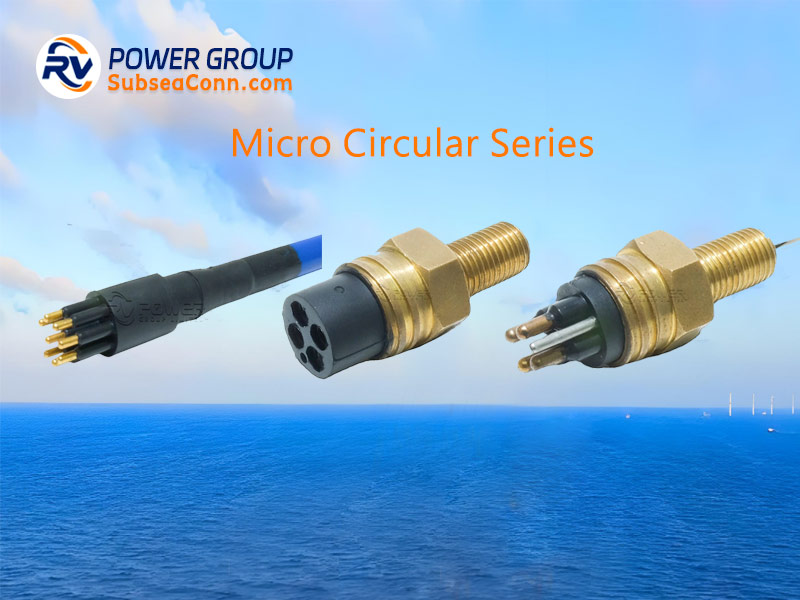
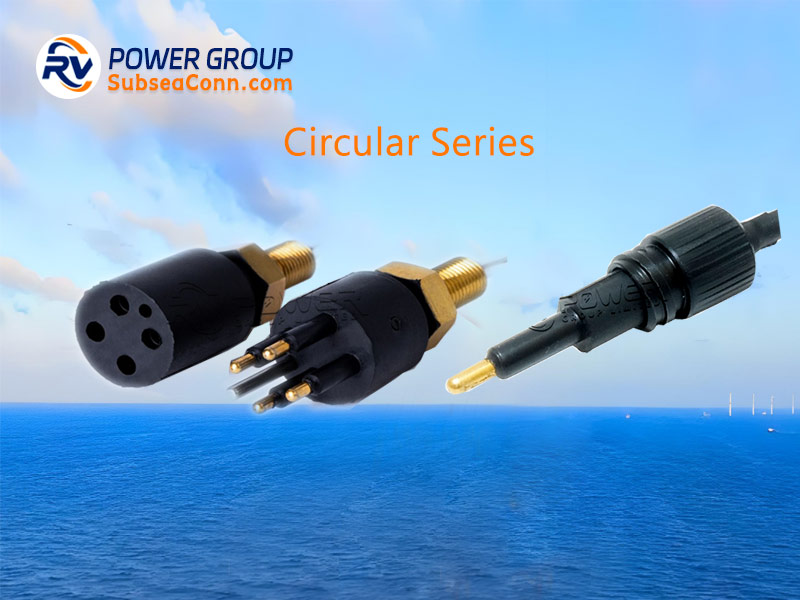
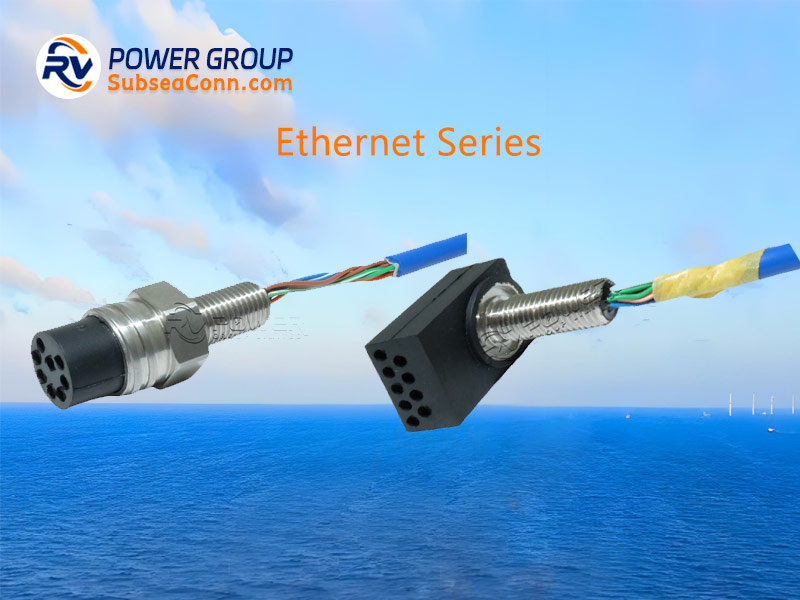
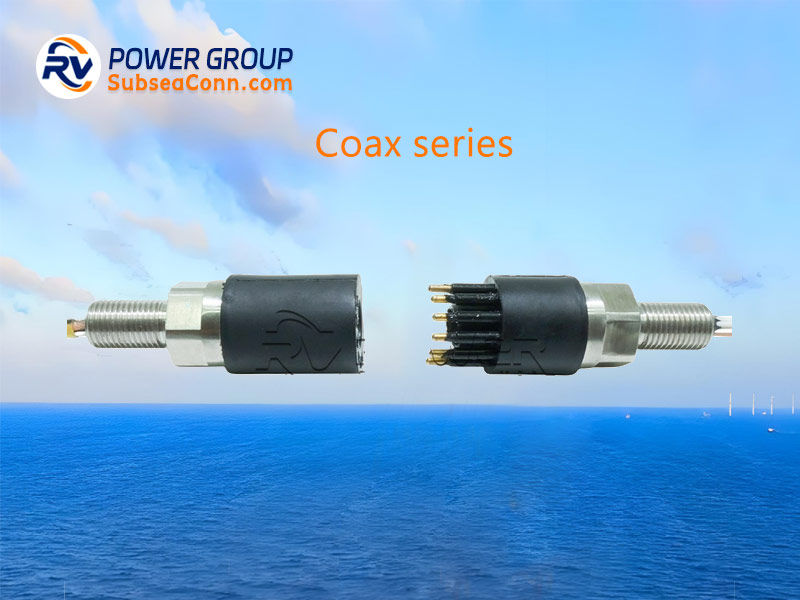
RV POWER GROUP manufactures wet-mate and dry-mate underwater connectors, penetrators and cable assemblies rated to 7,000 metres, including micro circular, metal shell, optical-electrical hybrid and high-power series for ROV, offshore wind and subsea oil & gas applications. For specification support or a cross-reference against an existing interface, contact [email protected].
Source: Glenair — SeaKing WetMate Interconnect, now in final qualification testing